
Crawl Space Waterproofing in Wake Forest, NC
Waterproofing deals with liquid water — standing on the ground or running in at the footing. It is a different problem from humidity, solved by different work, and it has to be finished before anything is sealed.
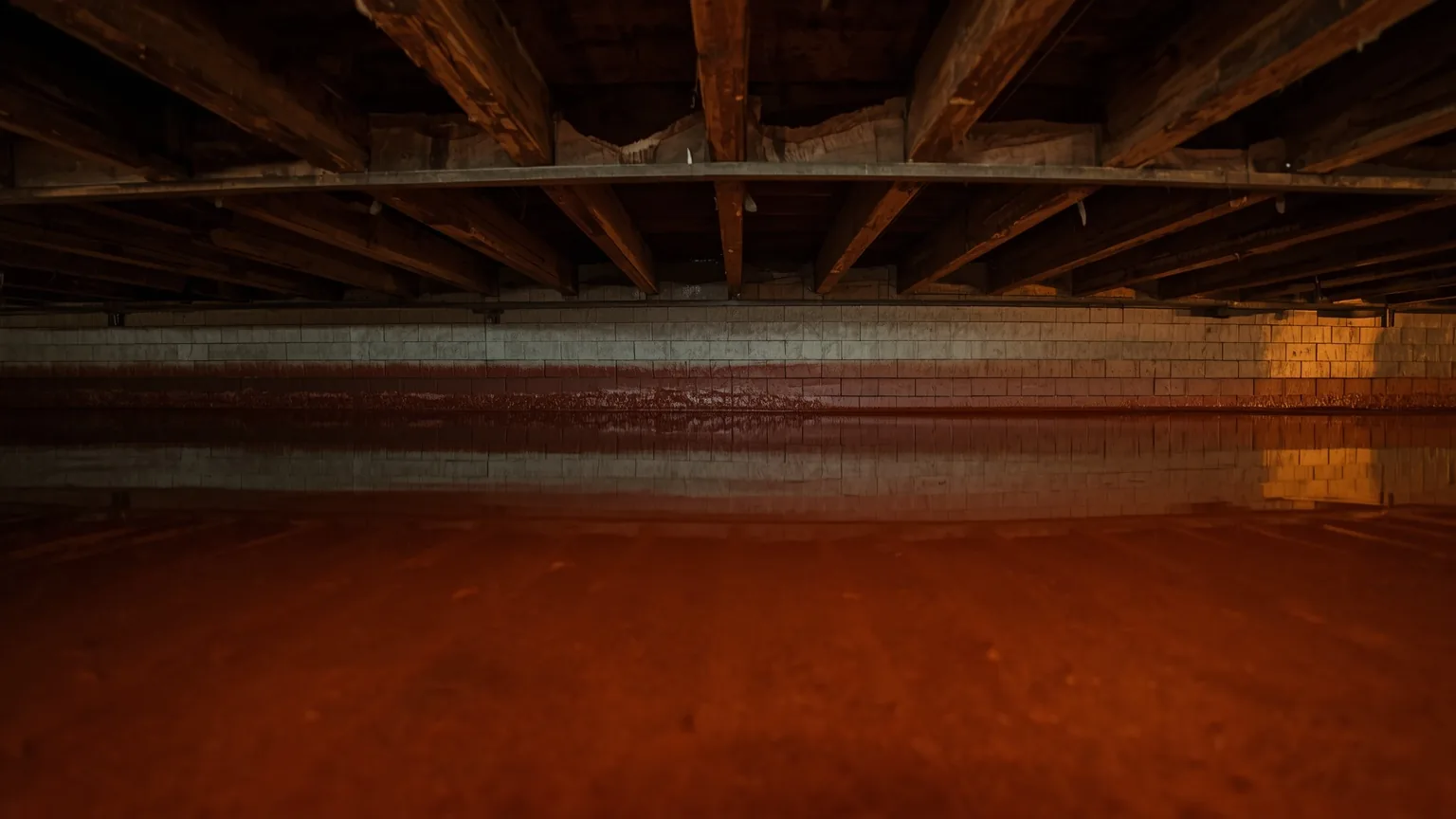
Who handles crawl space waterproofing in Wake Forest, NC?
Wake Forest Crawl Space Solutions arranges crawl space waterproofing across Wake Forest and northern Wake County — identifying where water enters, then specifying grading, drainage, a sump or sealing in the order that actually stops it. Call (919) 925-4696 to arrange an evaluation.
Establish the route before buying the fix
Water gets into a crawl space by a handful of paths, and the right repair depends entirely on which one you have. Getting this wrong is the most expensive mistake available in the subject.
- Surface water. Roof discharge at the foundation, downspouts terminating at the wall, grade that has settled back toward the house. The most common and the cheapest to correct.
- Groundwater. Rising or moving laterally through the soil. Requires interception rather than redirection.
- A plumbing leak. Its own category, ruled out early, and untouched by any drainage work.
- Condensation. Not a waterproofing problem at all, though it leaves real water and gets misread as one routinely.
What older foundations change
On the newer construction north of town, foundations are generally uniform and the water story is a straightforward one about grade and discharge.
On the older houses the picture is less tidy. Foundation walls may be masonry rather than poured, original drainage may be nothing more than the natural fall of the lot, and a century of landscaping, added walkways and regraded beds may have quietly reversed the fall the house was built with. Water frequently arrives through routes that did not exist when it was built.
That is not a reason for a bigger job. It is a reason to actually trace where it is coming in rather than defaulting to perimeter drainage because it is the standard answer.
The order the work belongs in
Least invasive first — and a proposal opening with excavation has skipped several steps.
- Downspout discharge. Extended well clear of the foundation. Cheap, reversible, and it resolves a real share of crawl space water on its own.
- Grading. Re-establishing fall away from the house. On older properties this is where decades of accumulated landscaping usually show up.
- Interior perimeter drainage. Collects what reaches the space and routes it out. Chosen where exterior digging is impractical — which mature planting frequently makes it.
- Exterior drainage. Intercepts water before it reaches the foundation. More thorough, considerably more disruptive.
- A sump. Where collected water cannot leave by gravity. The end of a drainage system, not a replacement for one.
Why it precedes sealing
A liner manages vapor; it does not remove liquid water. Laid over a space that still floods, it traps the water underneath where nothing dries it and nobody sees it.
A proposal for a wet crawl space should read as two scopes in sequence — stop the water, prove it through a real rain, then seal. One bundled number against encapsulation with no drainage line has skipped the first half.
What the code asks for underfoot
R409.2.1 requires more than a liner. The floor of a closed crawl space has to be graded so it drains to one or more low spots, with a drain to daylight or a sump pump installed at each — so a compliant closed crawl space in North Carolina has a plan for liquid water, not only for vapor.
The same section requires crawl space drains to be kept separate from roof gutter drain systems and foundation perimeter drains. Worth checking on any written scope: tying them together is faster to install and it routes roof water directly into the system meant to be carrying water away from under the house.
Crawl Space Waterproofing questions
Is perimeter drainage always the answer?
No, and defaulting to it is how people overspend. It is the right answer for genuine groundwater and the wrong answer for a downspout emptying at the foundation. Which you have is established by tracing where the water enters, and that is what an evaluation should deliver before any excavation is proposed.
My house is old and has never had drainage. Is that a problem?
Not necessarily — plenty of older houses shed water perfectly well on their original fall. What causes trouble is when that fall has been changed: beds built up against the foundation, a walkway added, landscaping regraded over the years. Those are correctable and much cheaper than a drainage system.
How long before I know it worked?
One serious rain, which is exactly why sealing should not follow in the same week. The liner should go down after the drainage has been through real weather rather than on the assumption that it will hold.
Can I do the grading myself?
Often yes, and it is the highest-return work available to a homeowner here. Extending downspout discharge well away from the house and restoring fall away from the foundation costs very little and resolves a meaningful share of crawl space water. Do that first and see what is left.
Related crawl space services
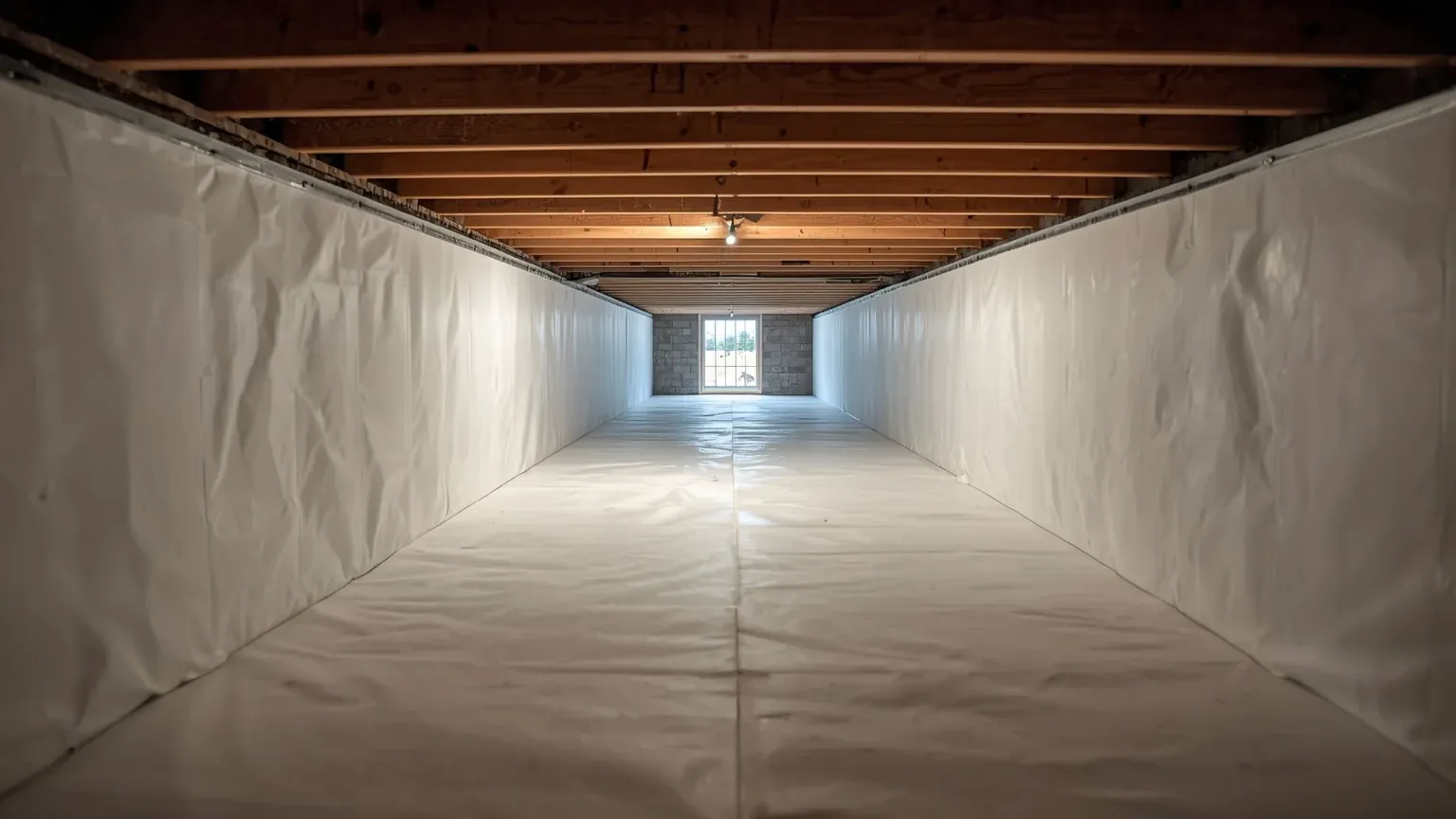
Crawl Space Encapsulation
Sealing and drying the space — scoped to what your clearance actually allows.
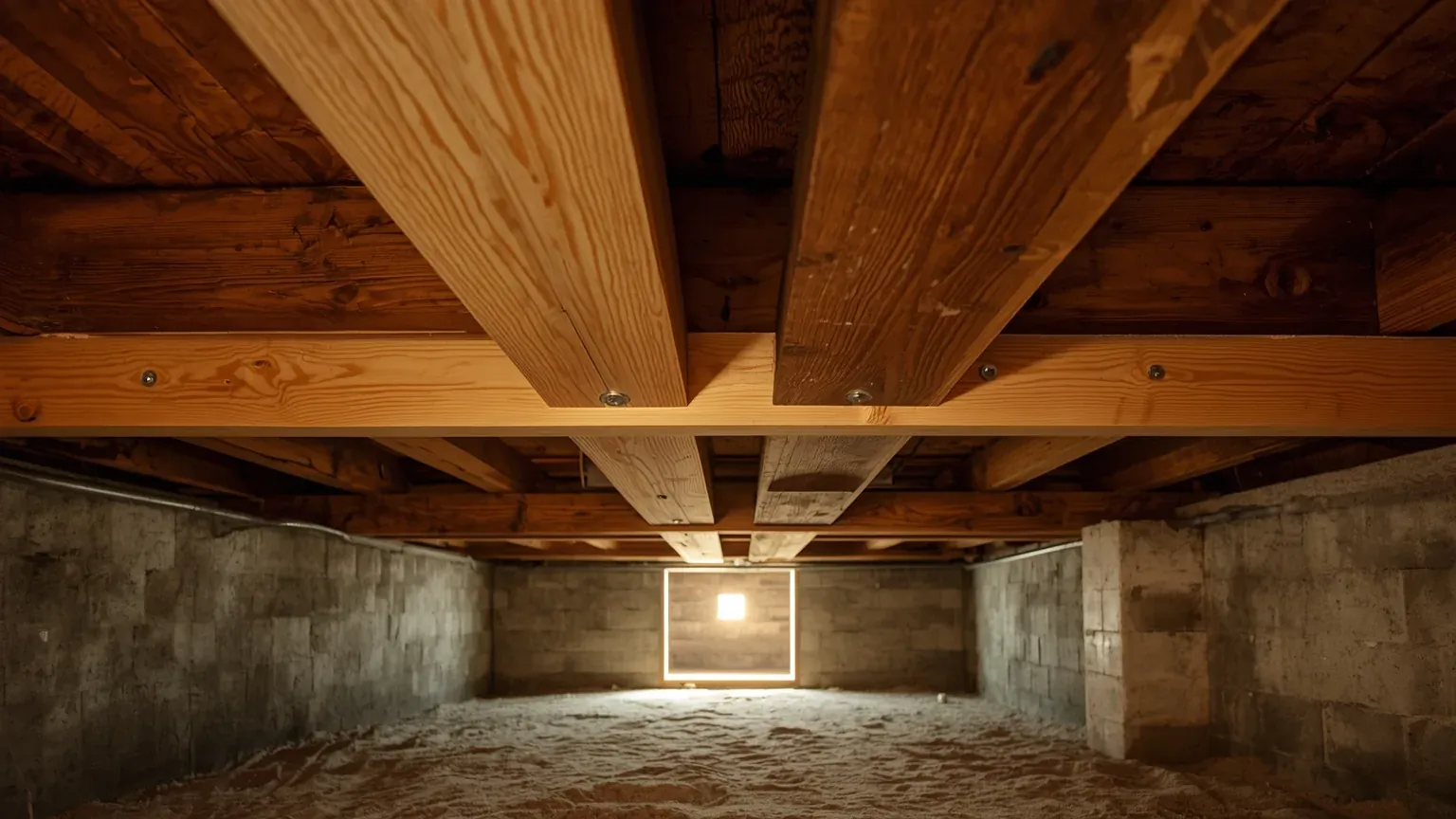
Crawl Space Repair
Telling active movement from old settlement — before anything gets jacked or replaced.
Crawl Space Cost
What drives the figure here — clearance, access — and the six questions that make quotes comparable.
Crawl Space Moisture Control
Which of four sources you actually have, and what that means you should buy.
Find out what is actually causing it.
Someone under the house, moisture readings taken, and the scope written down before a price is attached.