
Vapor Barrier Installation in Wake Forest, NC
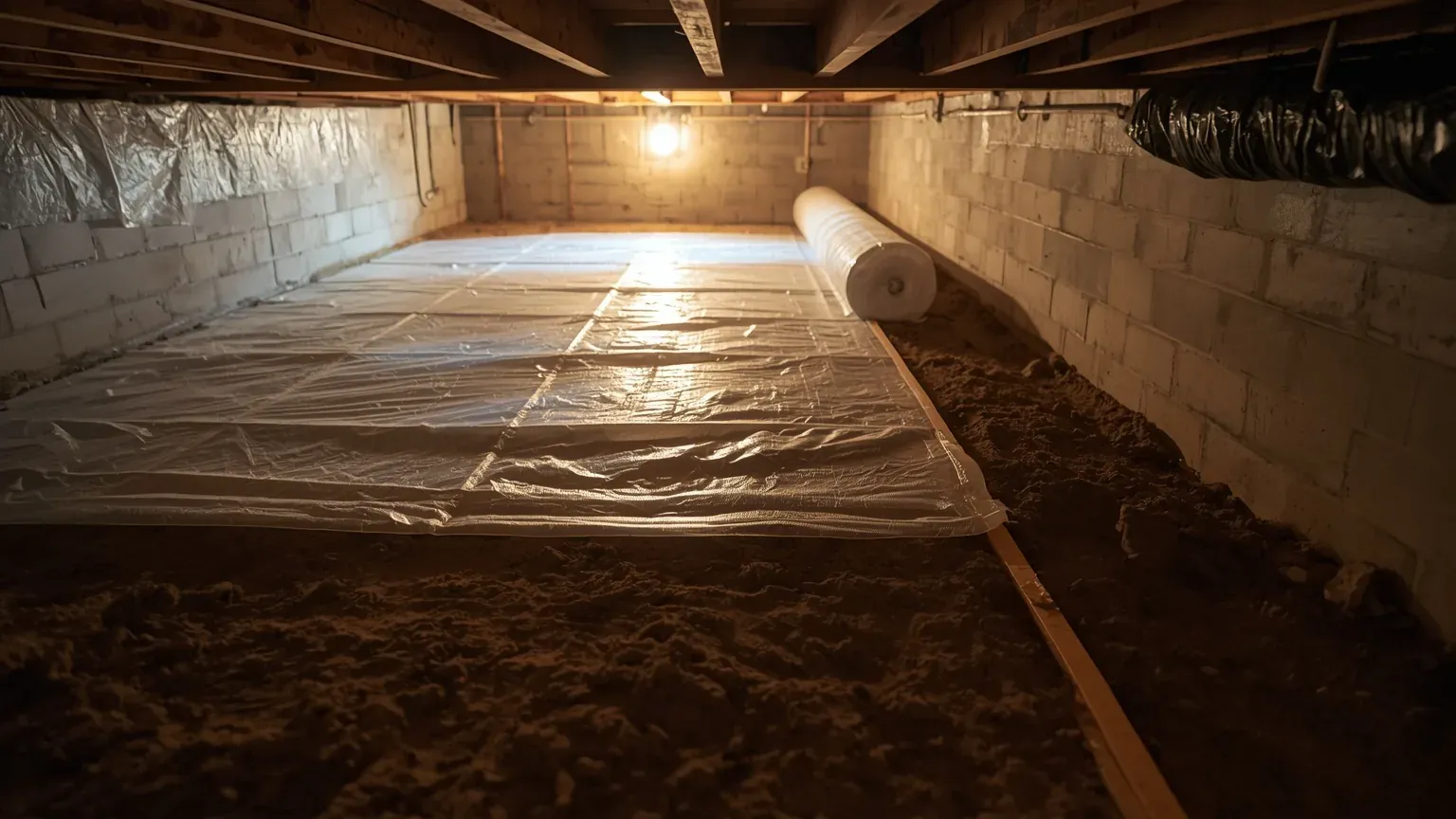
A vapor barrier covers the ground. That is a smaller scope than encapsulation and it costs accordingly — and on a budget, done properly, it is frequently the highest-value thing you can do to a crawl space.
Who handles vapor barrier installation in Wake Forest, NC?
Wake Forest Crawl Space Solutions arranges vapor barrier installation across Wake Forest and northern Wake County — a code-specification liner over exposed earth, properly lapped and terminated, either standalone or as the first stage of a sealed crawl space. Call (919) 925-4696 to arrange an evaluation.
What it fixes
Exposed earth releases moisture upward continuously — no leak, no event, just a steady contribution in every season. Northern Wake County sits on Piedmont crystalline rock weathering into deep, clay-rich saprolite, and clay holds water near the surface rather than shedding it, so bare ground here stays a live source well after rain has passed.
Covering it interrupts that. What it does not touch is air coming through the vents, which in this climate is usually the larger share. Ground cover in a still-vented crawl space removes one source and leaves the other running — often still a good buy, but not the same as sealing the space.
The specification to hold a quote to
R409.2.1 sets a minimum 6-mil polyethylene vapor retarder or equivalent, covering all exposed earth, with joints lapped not less than 12 inches.
Heavier reinforced liners are common and take foot traffic far better, but that extra weight buys puncture resistance rather than better vapor performance — worth paying for on its own merits, not as a moisture upgrade.
Where liner runs up the walls, the R409.2.2.1 termite gap applies: at least 3 inches and no more than 4 below the sill. On older masonry foundations that band is precisely where activity shows first, so burying it is a genuinely bad trade.
Where the money actually goes on an older crawl space
The material is cheap. What varies is the labor, and on the older houses near the town center that variance is large.
Low clearance slows everything. Irregular pier layouts mean far more cutting and sealing around obstructions than a clean modern space needs. Original access openings are often small enough that material handling becomes its own task. And uneven ground means more trimming and more seams.
None of that makes the job unsuitable. It does mean a per-square-foot number quoted over the phone will not survive contact with the house.
When it is the whole job
Where the ground is the only source — bare earth, no standing water, framing reading normal, no history of summer humidity upstairs — ground cover can genuinely be all you need.
Where humid air is condensing on cool surfaces it is a partial measure by definition. Moisture control covers how to establish which of those you actually have before buying either one.
Why deep saprolite keeps the ground damp
Northern Wake County sits on Piedmont crystalline rock that weathers in place into saprolite — a clay-rich material that can run many tens of feet deep before solid rock begins. Clay holds moisture near the surface rather than letting it drain away quickly.
The practical effect in a crawl space is that exposed earth stays an active source long after the weather has cleared. That is the mechanism a ground liner interrupts, and it is why covering the earth pays off even where the space has never taken standing water.
Vapor Barrier Installation questions
What does the code require?
R409.2.1 sets 6-mil polyethylene as the minimum over exposed earth, with joints lapped at least 12 inches. That is a floor rather than a target — heavier reinforced liners survive foot traffic much better, though the gain is durability rather than vapor performance.
Is a vapor barrier the same as encapsulation?
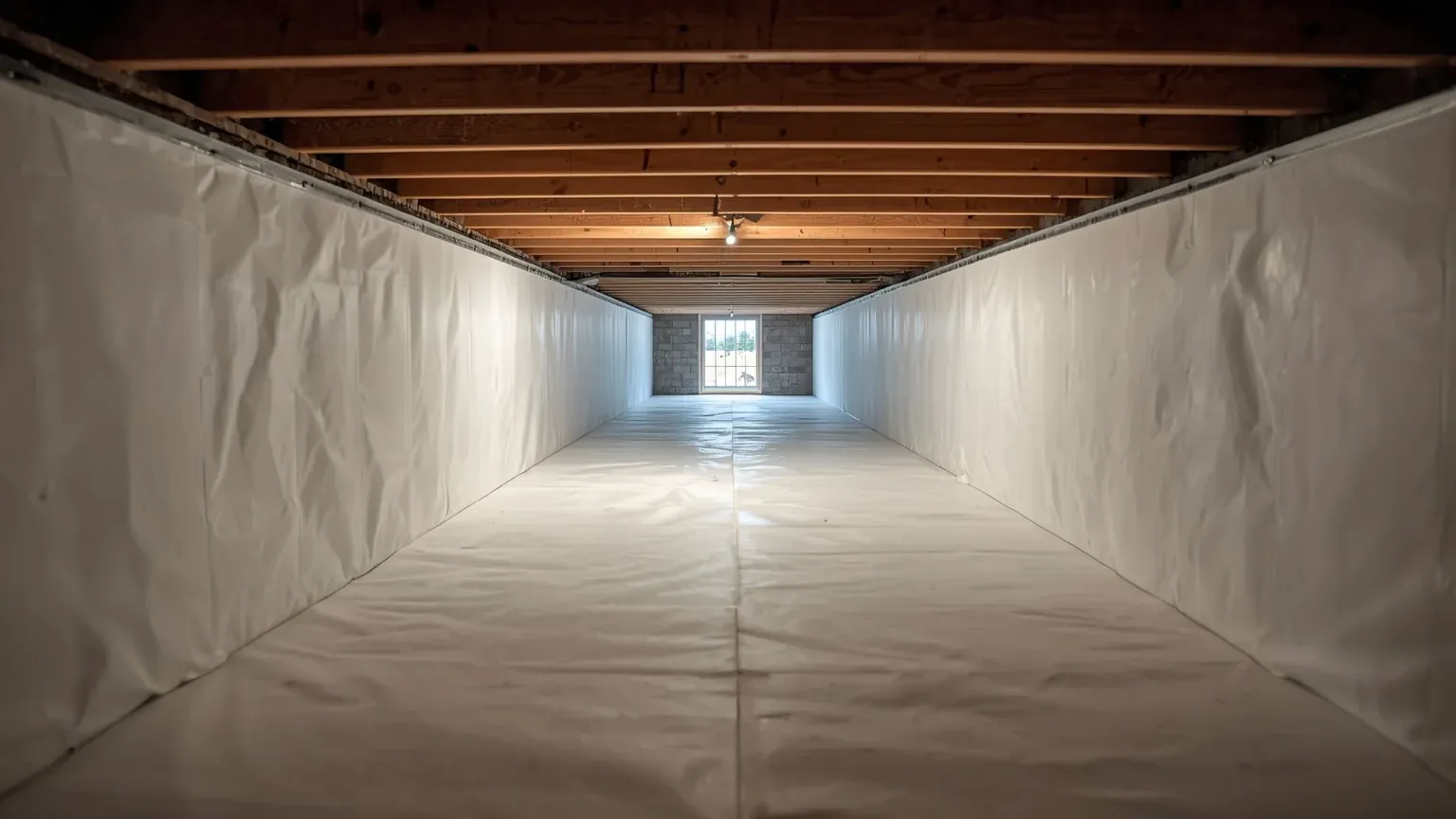
No. A vapor barrier covers the ground. Encapsulation covers the ground, seals the vents and rim joist, and adds a means of drying the sealed space. They are different scopes at different prices, which is exactly why a quote should name which one it is.
Is it worth doing on an old crawl space with low clearance?
Often it is the best-value option available there, precisely because full encapsulation in a tight space gets expensive fast. Covering the ground removes a continuous moisture source for a fraction of the cost. Just expect the labor to be higher than a per-square-foot estimate suggests.
Can I install it myself?
In a space with reasonable clearance, physically yes. The detailing is what separates a lasting install from a temporary one — sealing seams, terminating properly at the wall, cutting in around piers. In a low-clearance older crawl space, that work is genuinely difficult and unpleasant to redo.
Related crawl space services
Crawl Space Encapsulation
Sealing and drying the space — scoped to what your clearance actually allows.
Crawl Space Moisture Control
Which of four sources you actually have, and what that means you should buy.
Crawl Space Cost
What drives the figure here — clearance, access — and the six questions that make quotes comparable.
Crawl Space Waterproofing
Liquid water traced to its actual route in — then stopped, before anything is sealed.
Find out what is actually causing it.
Someone under the house, moisture readings taken, and the scope written down before a price is attached.